
Picture it. It's pouring, the car pulls into the garage, and everyone piles in at once. Backpacks go straight onto kid-height hooks. Cleats land on a tray by the bench. The dog gets a towel and a quick wipe before he reaches the kitchen. Jackets hang open so they can dry, and the floor just keeps being a floor.
…Well, that's the dream muddy mudroom situation, at least.
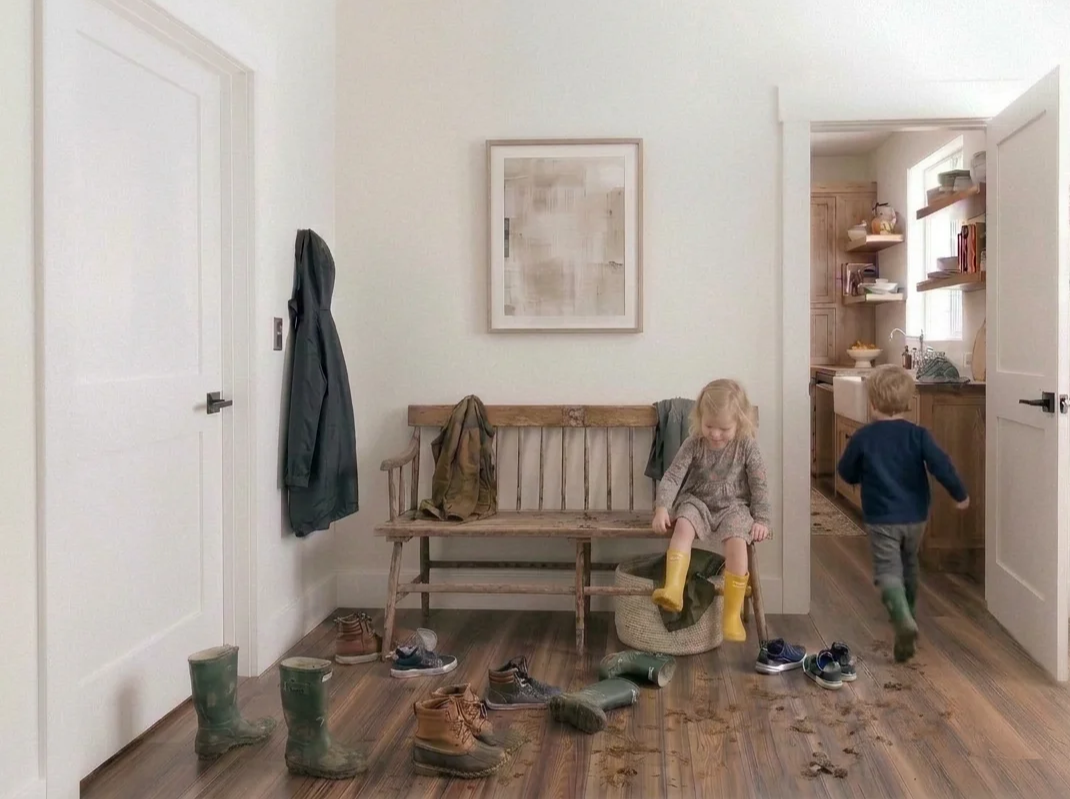
Here in the Upstate, the real version looks a little different. A thunderstorm rolls in right as the soccer game ends. Somebody spent the afternoon on a trail at Paris Mountain, and the red clay came home on every shoe (and at least one set of paws). The backpack is soaked. The towel is already on the floor.
None of that is a discipline problem. Nobody forgot to be tidy. The room just wasn't built for wet. So let's talk about what a functional mudroom actually does when it's raining, with ideas that work in a full mudroom, a back hall, or one corner of the garage.
What "Functional" Actually Means When It's Wet Out
Drop, Drip, Dry, Go
Most mudroom ideas are about storage. More hooks, more cubbies, a bench. All good. But when the weather turns, a mudroom has a bigger job: moving wet things through the house, from the door to dry, without leaving a trail behind. We think of it as four steps: Drop, drip, dry, go.
Drop
Bags, coats, and gear land in one spot the moment someone walks in. Hooks at kid height mean kids can actually do it. A bench gives everyone a place to sit and peel off wet shoes.
Drip
Water needs somewhere to go besides your floor. A boot tray catches the runoff, and a wipeable zone underneath handles the rest. Give the wet umbrella and the damp towel a home too, so they don't end up draped over a kitchen chair.
Dry
Wet gear needs air. Open hooks, vented cubbies, and shelves with a little space between items let things dry out instead of getting funky behind a closed door. If you can, keep wet and dry storage separate, so one soggy raincoat doesn't dampen everything around it.
Go
Tomorrow's shoes, bags, and sports gear get staged here once they're dry, so the next morning starts easy. If mornings are your real pain point, our guide to morning routine tips for families pairs well with this.
Functional Mudroom Ideas for Muddy, Rainy Seasons
Here's what we'd put in a mudroom built for a wet season. Pick the two or three that fit your family and start there.
Floors and Walls That Forgive
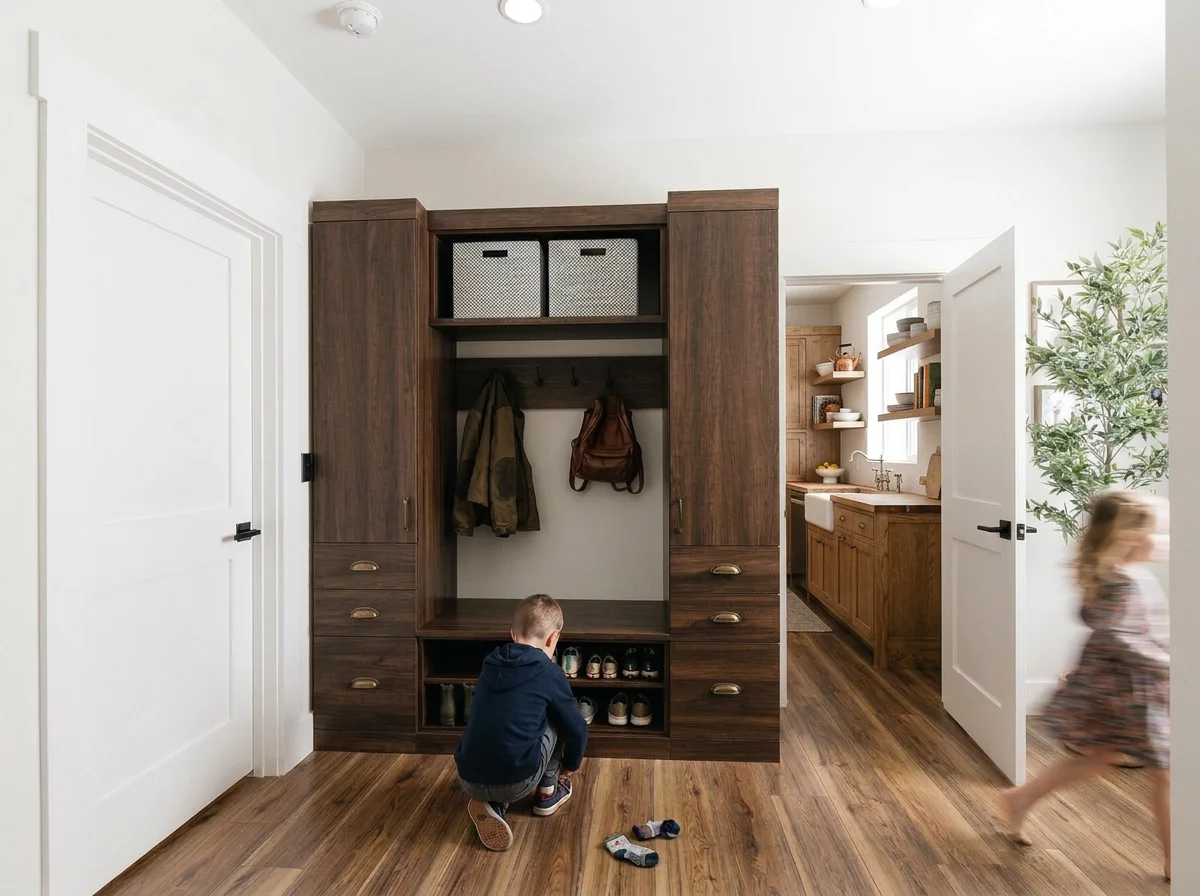
Mud doesn't stay on the floor. It ends up on cabinet fronts, lower walls, and the bench. Choose surfaces you can scrub: washable finishes where hands and boots land, and flooring that hides dirt and handles water. Pretty is great. Wipeable is better. At More Space Place, we recommend TFL (Thermally Fused Laminate) cabinetry for mudrooms because it's as practical as it is beautiful. The durable, nonporous surface is resistant to everyday stains and scratches, and most messes can be wiped away with a damp cloth. It's low-maintenance, easy to love, and with MSP Greenville, available in a variety of TFL finishes and colors.
Cubbies and Hooks That Kids Can Actually Reach
Give every person their own cubby or hook, and hang a few at kid height. Add a bin for the "wet bag": swim gear, soccer cleats, the towel from the lake. When the wet stuff has its own home, it stops migrating through the house.
Boot and Shoe Spots That Let Things Dry
Open shelving or vented cubbies over a tray work well. Closed doors and wet shoes don't mix, so if you love the look of cabinets, plan for some airflow.
A Spot for the Dog (and Everything the Dog Brings In)
A leash hook, a towel, and paw wipes in a drawer by the door. Wiping paws takes thirty seconds when everything is within reach. Wiping the couch takes a lot longer.
Small Mudrooms and Garage-Door Drop Zones
No dedicated mudroom? Plenty of homes don't have one. We handle custom garage and utility storage all the time. A narrow wall by the garage door can do the job: a bench with storage, a row of hooks, and a tray. Even four feet of wall handles drop, drip, dry, go. Keep it simple, and keep the wet things on one side.
When Hooks and Trays Aren't Enough
If the family still piles up at the door, the room probably needs a system, not another bin. A custom mudroom is built around how your family really moves through the house: lockers sized for hockey bags or hiking boots, benches with hidden storage, cabinets that keep the mess out of sight but still let things breathe. Start with our guide to mudroom storage ideas, or reach out for us to collaborate on your perfect mudroom.
Functional Mudroom FAQs
-
Let things dry fully before they go into closed storage. Use open or vented shelving for wet shoes and coats, run a fan or crack a window when you can, and wash the boot tray and wet-bag bin regularly. A lingering smell usually means moisture is stuck somewhere.
-
Look for flooring that handles water and wipes clean, like tile, luxury vinyl plank, or sealed stone. Mid-tone colors and a little pattern hide dirt better than very light or very dark floors. A washable rug or mat by the door catches the first wave.
-
Short and simple: go vertical. You don't need a full mudroom to create a functional drop zone. Start with the spot where your family already drops things, whether that's a garage entry, back hall, or stretch of wall by the front door. Go vertical with hooks at two heights, add a bench with storage underneath, and use a shallow tray for shoes. Giving each person a designated hook or spot keeps everyday clutter from piling up, and you can always add more storage as your needs change.
-
Make it easy first. Hooks at their height, one labeled spot each, and a bin for the wet stuff. Kids follow the path of least resistance, so design the path.
A home that handles the messy days doesn't have to be a perfect one. At More Space Place Greenville, we design mudrooms and entries around the way your family really comes and goes, rain, mud, and all. Stop by our showroom at 1461 Woodruff Rd., Suite D in Greenville, call (864) 558-0488, or get in touch below to start planning.